
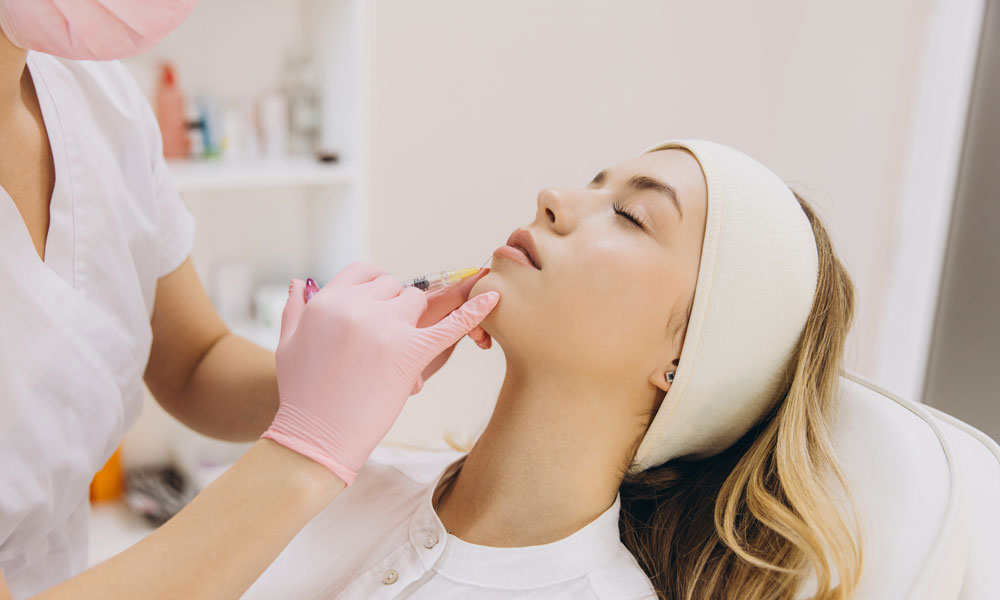
Skin boosters have become some of the most requested treatments in any modern aesthetic clinic. They sit in a space between traditional skincare and classic dermal fillers. They are injectable treatments, but they are not used to create big lips or sculpted cheeks. Instead, they focus on skin quality – hydration, elasticity, brightness and firmness.
Two of the most talked-about options are polynucleotides and Profhilo. Polynucleotides are regenerative injectables made from highly purified DNA fragments. They are designed to stimulate repair, support collagen and elastin production, and improve overall skin function. Profhilo is an ultra-hydrating hyaluronic acid skin booster that spreads evenly through the skin, improving moisture, firmness and radiance without adding filler-style volume. There are also developments such as Profhilo Structura, created to offer support and remodelling in specific areas that need structure as well as hydration.
Both treatments can refresh tired, dull or lax skin. But they work in different ways, and they suit slightly different concerns. This article explains how they work, who they’re best for, and when it makes sense to use both together.
What are polynucleotides?
Polynucleotides are regenerative skin boosters. They are made from filtered, highly purified DNA fragments that act like biological signals inside the skin. When injected into targeted areas, these tiny fragments encourage the body’s own cells to repair damage, rebalance inflammation and build better-quality tissue.
In simple terms, polynucleotides are not trying to “fill” the face. They are trying to improve what is already there.
Key benefits of polynucleotides include:
- Increased collagen and elastin production
- Support for skin elasticity and firmness
- Improved hydration and plumpness
- Better texture and bounce in thin or crepey areas
- Calming and recovery support in stressed or fragile skin
Because they work on repair and remodelling, polynucleotides are often chosen for skin that is showing early signs of thinning, fine lines, laxity or stress. They are especially helpful in delicate areas that can be difficult to treat with traditional fillers, such as under the eyes, the neck and the décolletage. Many people also look at polynucleotides for early ageing around the mouth and cheeks, where the skin can start to look tired even if there is not obvious volume loss.
Polynucleotide treatments usually work gradually. You will not walk out looking suddenly different. Instead, you should see a progressive improvement in firmness, smoothness and density over a series of sessions, as the skin responds and repairs.
What is Profhilo?
Profhilo is a highly concentrated, stabilised form of hyaluronic acid that acts as a powerful skin hydrator and bio-remodeller. Unlike filler, it is not injected to sit in one place and create shape. Instead, it spreads through the treated area after injection, flowing like a honey-like gel under the skin. This gives an overall boost in hydration, glow and elasticity.
Rather than targeting just one line or one hollow, Profhilo treats the overall quality of the skin. Many people describe the result as “my skin but better” – smoother, fresher and bouncier, especially in areas that often look dull or dehydrated such as the cheeks and lower face.
Profhilo is often chosen when someone feels that their face looks tired, flat or creased, but they do not necessarily want filler or anything that changes facial structure. Because it hydrates and firms from within, it can also soften the look of fine lines and mild laxity around the jawline, lower cheek and neck.
You may also hear about Profhilo Structura. This is part of the same family of products, but it is designed for areas that benefit from a little more tissue support. Where classic Profhilo focuses on hydration and skin elasticity, Profhilo Structura aims to provide gentle reinforcement in areas where the skin would benefit from lift, resilience and strength.
What is Skinvive by Juvederm?
The Skin Specialist Nurse clinic now also offers Skinvive by Juvederm, a next-generation hyaluronic acid skin booster designed to improve the smoothness, hydration and radiance of the skin, particularly in the cheek area. Unlike traditional dermal fillers, Skinvive is not used to add volume or change facial shape. Instead, it works more like a deep, injectable skincare treatment that helps the skin hold on to moisture and reflect light more evenly.
Skinvive is delivered as a series of tiny microdroplets placed just beneath the surface of the skin. These microdroplets sit within the tissue and gradually improve the look and feel of the skin from within. Many people notice that their cheeks appear fresher and more luminous, with make-up applying more smoothly and fine surface irregularities looking softer.
Key benefits of Skinvive by Juvederm include:
- Improved skin smoothness, especially across the cheeks
- Increased hydration and a healthier-looking glow
- A subtle “lit-from-within” radiance without adding volume
- Softening in the appearance of fine lines and mild texture changes
- Minimal downtime, with only small bumps or redness at injection points that usually settle quickly
Skinvive is often a good option if you feel your skin looks dull, flat or lacklustre in certain lights or in photos, but you do not necessarily need lifting or structural support. It can also sit comfortably alongside other treatments such as polynucleotides or Profhilo, as part of a tailored plan that targets different layers of the skin. During your consultation at The Skin Specialist Nurse clinic, your practitioner can advise whether Skinvive, used alone or in combination with other boosters, is the best choice to achieve your individual skin goals.
Who is best suited to polynucleotides?
Polynucleotides are a strong option if you are noticing early skin ageing that is less about dryness and more about weakness. Typical concerns include:
- Crepey texture, especially under the eyes or on the neck
- Mild tissue laxity in areas where the skin feels thin
- Loss of natural elasticity rather than just loss of moisture
- Visible stress or dullness from lifestyle or environmental factors
- Post-inflammatory changes where the skin needs support
They are also well suited to people with sensitive or reactive skin, because polynucleotides have a reputation for helping calm and rebalance the skin’s environment. If your skin barrier is not at its best, or you feel you look “tired” rather than “dry”, polynucleotides may be the right path.
Polynucleotides are popular for the under-eye area in particular. This area can be tricky to treat because traditional filler can look puffy or heavy if used in the wrong candidate. Polynucleotides work differently: by improving tissue quality and hydration in a more natural, gradual way, they can help soften the appearance of fine lines and shadowing without bulk.
Who is best suited to Profhilo?
Profhilo is ideal if your main worry is dullness, dryness or a general “crumpling” look in the lower face. If you look in the mirror and feel that your skin has lost its glow or looks collapsed when you smile, Profhilo is often a great first injectable.
Good candidates include people who:
- Want all-over hydration, not targeted volume
- Are starting to see fine lines around the mouth and cheeks
- Feel their skin looks “tired” or “flat” rather than actually sagging
- Want firmer, bouncier-looking skin without filler-style enhancement
- Are looking for a predictable treatment with a well-known safety profile
Profhilo is frequently used in the mid and lower face, jawline, neck and sometimes the backs of the hands. Patients often notice improved smoothness and tighter-looking skin after the recommended course.
Profhilo Structura becomes interesting where there is early structural softening in areas such as the mid-face. By focusing on tissue support as well as hydration, it aims to gently reinforce areas that are starting to descend or lose density. This is helpful for people who want preventative, subtle support without stepping straight into traditional filler.
Can you combine polynucleotides and Profhilo?
Yes – in many cases, these are complementary treatments rather than competing ones. They simply have different priorities.
Polynucleotides = repair, regeneration, tissue quality
Profhilo / Profhilo Structura = deep hydration, elasticity, firmness and light support
For example, someone with fine, crepey under-eye skin and general dullness in the lower face might benefit from polynucleotides under the eyes and Profhilo across the cheeks and jawline. Another person might use Profhilo Structura to gently support the mid-face, while using polynucleotides on the neck to help improve texture and bounce.
Combining approaches like this allows an aesthetic clinic to build a full-face or full-neck plan that focuses on quality, health and longevity, rather than just chasing individual lines.
What to expect from treatment
Both treatments are injectable, so they should always be carried out by a trained medical professional in a clinical setting. A consultation is essential. This is where your practitioner will assess skin thickness, texture, hydration levels and elasticity, and recommend a personalised plan.
Most patients will need a course rather than a single session. With Profhilo, for example, two sessions spaced a few weeks apart is common, followed by maintenance later in the year. Polynucleotides are often given over a small series to build long-term benefit.
Downtime is generally minimal with both treatments, although you may see small bumps, tiny marks or light redness at the injection sites for a short period.
You should not expect an instant “done in an hour, look ten years younger” effect. These are not traditional fillers and they are not facelift alternatives. They are skin quality treatments. The result is softer, brighter, more elastic and more hydrated-looking skin that still looks like you.
Which skin booster is right for you?
If you feel your skin looks dry, dull and lifeless, and you want brighter, smoother, firmer-looking skin without adding volume, Profhilo is often the first choice. If you are starting to notice thinning, creasing or fragility in areas like under the eyes or neck, polynucleotides may be more suitable.
If you want subtle improvement in both hydration and tissue support, your practitioner may suggest a plan that includes Profhilo Structura alongside other boosters, placed in different parts of the face for different outcomes.
The most important step is consultation. A high quality aesthetic clinic will not simply offer one product to everyone. They will assess your individual skin needs, explain what is realistic and design a treatment plan that improves your skin health rather than chasing trends.
In other words, the right skin booster is not just about what is popular. It is about what your skin genuinely needs.