
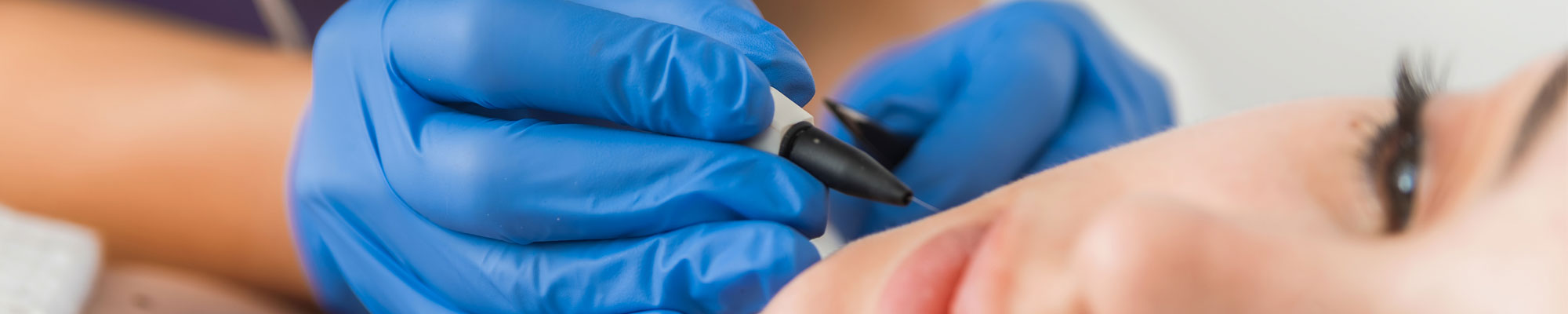
CARE FOR SMALL SKIN BLEMISHES
Advanced Electrolysis
Explore treatment for small skin blemishes, with time to understand your concerns and assess what is right for your skin.
Minor blemishes can affect how you feel about your appearance. A consultation helps you understand whether advanced electrolysis could help, what to expect and how your skin may heal.
Visit our clinic in Stowe, near Buckingham, serving clients from Milton Keynes and the surrounding area.
UNDERSTANDING THE TREATMENT
What is advanced electrolysis?
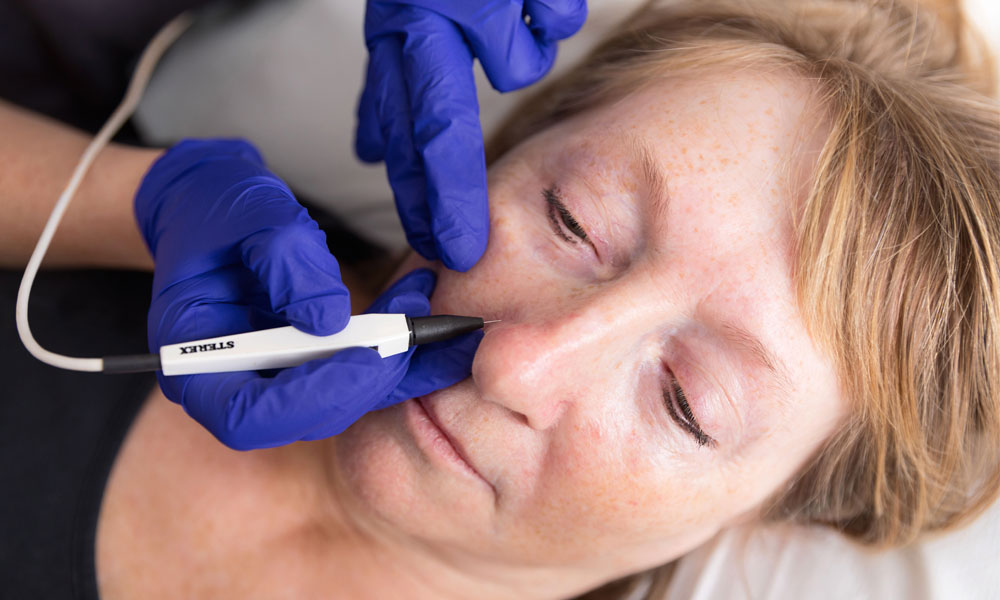
Advanced electrolysis uses a fine probe and an electrical current to treat selected superficial skin blemishes. The technique is chosen according to the blemish and the area being treated.
Skin blemishes are common and can develop for different reasons, including ageing, sun exposure and some health conditions. They do not all need treatment, and different-looking bumps can require different approaches.
Your practitioner will assess the area, discuss your medical history and explain the options, expected outcome and aftercare before any treatment is agreed.
This page focuses on skin blemishes. If you are looking for hair removal, please ask the team about the appropriate service.
START WITH AN ASSESSMENT
Which blemishes can be considered?
Suitability depends on the type, size and position of the blemish, your skin and your health history. The options below are topics to discuss at your consultation.
Skin tags
Small, soft growths may be suitable for removal after assessment. The treatment area needs time to heal.
Milia
Small white bumps need to be identified correctly before a removal method is chosen.
Blood spots & facial veins
Selected small blood spots and visible facial veins may be considered. Your practitioner will explain the likely degree of improvement and whether further appointments may be needed.
Other lumps, cysts, warts and moles: these require assessment rather than assuming electrolysis is suitable. Some need a different treatment or medical review. Read more about skin lesions and moles and warts.
If a lesion is changing in size, shape or colour, bleeding without an obvious cause, or you are unsure what it is, seek advice from your GP before cosmetic treatment.
YOUR VISIT & RECOVERY
A plan for your skin, from consultation to healing
Bring details of your medicines, allergies, medical conditions, previous treatments and any tendency to scar or develop changes in skin colour. Mention implanted medical devices and pregnancy so your practitioner can assess suitability.
Ask what the procedure will feel like, how many appointments may be needed and the full cost. A change may be visible after treatment, but the final appearance can only be judged after healing. Results vary and complete removal cannot be guaranteed.
Temporary redness, swelling or small crusts may occur. Changes in pigmentation, infection and scarring are possible risks to discuss before you decide to proceed.
Follow the individual aftercare advice provided. Avoid picking the area, and ask when you can restart your usual skincare, make-up, exercise and sun exposure. Contact the clinic if you have concerns about healing.

YOUR QUESTIONS
Advanced electrolysis FAQs
Is advanced electrolysis the same as hair-removal electrolysis?
Here, advanced electrolysis refers to techniques for selected skin blemishes. Hair-removal electrolysis targets hair follicles. Tell the team what you would like help with so they can advise on the appropriate appointment.
Will I need more than one appointment?
This depends on the blemish, the number of areas and how your skin responds. Your practitioner will explain the proposed plan at your consultation; further treatment may be needed.
Does treatment hurt?
You may feel a brief heat or stinging sensation. Sensitivity varies with the area and the technique. Discuss comfort and any concerns with your practitioner before treatment.
How long does recovery take?
Healing varies with the treatment and your skin. Allow time for temporary redness or crusting to settle and ask for guidance before booking around a holiday or important event.
Can all moles or bumps be treated?
No. The area must first be assessed. Uncertain or changing lesions need medical advice, and some blemishes require a different approach. A cosmetic consultation does not replace a GP assessment of a concerning lesion.
Where can I find the cost?
See the skin-lesion and blemish prices. Your practitioner can confirm the appropriate treatment and total cost after assessing the area.
Learn more about electrolysis
Understand small skin bumps
TAKE THE NEXT STEP
Talk to us about your skin concern
Start with an assessment and a clear explanation of your options.