
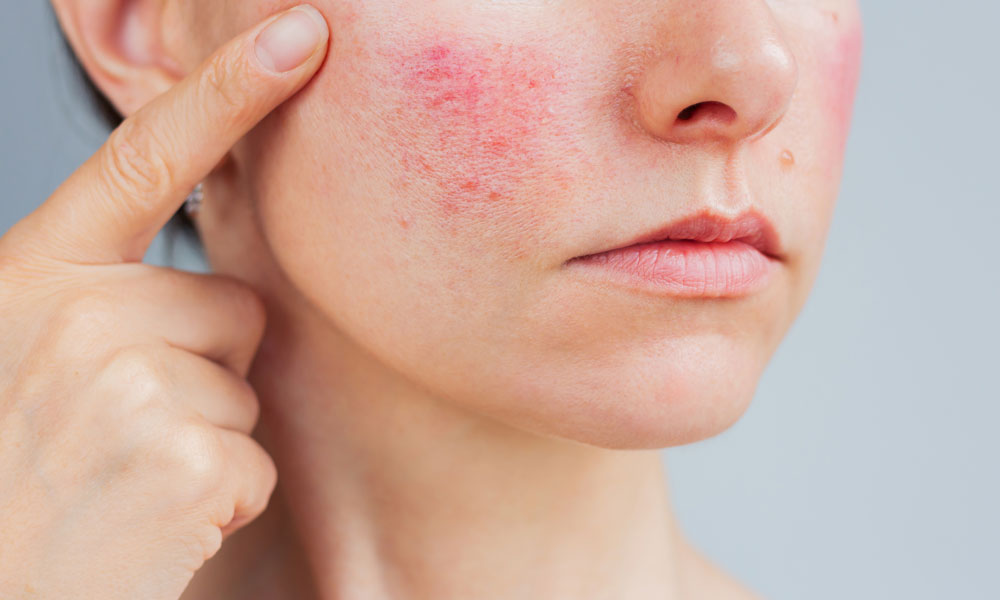
Most people go red in the face from time to time. A hot room, an extra glass of wine, a stressful meeting – all of these can trigger flushing that settles within minutes. For some, though, that redness starts to linger. It may spread across the cheeks and nose, feel hot or sting, and be joined by visible veins or acne-like bumps. At that point, you may be dealing with Rosacea rather than simple flushing.
Understanding the difference matters, because ongoing redness is more than just a cosmetic issue. It can affect confidence, comfort and quality of life – and it responds best to a combination of lifestyle changes, tailored skincare and, where appropriate, medical treatment from an experienced skin clinic.
Flushing or Rosacea – what’s the difference?
Simple flushing is usually:
- Short-lived – it fades within minutes to an hour.
- Triggered by an obvious cause, such as embarrassment, exercise, a hot bath or a spicy meal.
- Not associated with persistent background redness or visible broken blood vessels.
It’s essentially your blood vessels opening up briefly under the skin and then returning to normal. Uncomfortable at times, but not usually a sign of an ongoing problem.
Rosacea, by contrast, is a chronic inflammatory skin condition that mainly affects the central face – cheeks, nose, chin and forehead. It typically:
- Starts with frequent flushing, then progresses to longer-lasting redness.
- Can cause visible tiny blood vessels (telangiectasia).
- May include acne-like bumps and pustules.
- Often comes with burning, stinging and sensitivity to skincare.
- May, in some people, lead to skin thickening on the nose or eye symptoms.
Crucially, Rosacea tends to wax and wane over months and years. It’s not “just a bit of redness”; it’s a medical condition with its own pattern and triggers.
Common Rosacea triggers
Rosacea doesn’t have a single cause, but most people find their symptoms flare in response to a familiar set of triggers. These often include:
- Heat and temperature changes – hot weather, central heating, saunas, hot baths.
- Sun exposure – UV is a major driver of flares.
- Alcohol – especially red wine.
- Hot drinks – it’s often the heat, not the caffeine.
- Spicy foods – curries, chilli sauces and heavily spiced dishes.
- Stress and strong emotions – adrenaline and blood-flow changes can trigger flushing.
- Strenuous exercise – high-intensity workouts in warm environments.
- Harsh skincare – fragranced products, strong acids, gritty scrubs, high-strength retinoids.
The exact combination is personal, which is why keeping a simple “flare diary” can be so helpful. Note what you eat, drink and do on days when your Rosacea worsens; patterns often emerge surprisingly quickly.
The role of the skin barrier
Many people with Rosacea also have a compromised skin barrier – the outer layer is less effective at holding moisture in and keeping irritants out. That can show up as dryness, tightness, stinging with products, and a tendency to react to things others can use without issue.
Because of this, strong exfoliants, foaming cleansers and heavily perfumed products can make redness worse. Supporting the barrier with gentle, non-irritating skincare is one of the most powerful everyday tools a skin clinic can offer.
How a skin clinic assesses facial redness
If you’re not sure whether your flushing is “normal” or a sign of Rosacea, a thorough consultation is the best starting point. In a medically led aesthetic clinic, your practitioner will usually:
- Take a detailed history – when the redness started, what seems to trigger it, any associated burning, bumps or eye symptoms.
- Examine the skin in good light, looking at pattern, distribution and texture.
- Consider other conditions that can mimic Rosacea, such as acne, seborrhoeic dermatitis, allergies or, more rarely, systemic issues.
- Discuss current skincare, medications and overall health.
From there, they can confirm whether Rosacea is likely and suggest an appropriate, stepwise plan – often in partnership with your GP or dermatologist for more advanced cases.
Calming Rosacea with tailored skincare
For most people with Rosacea, the first line of management is a simplified, soothing skincare routine designed to calm inflammation and rebuild the barrier. A skin clinic will usually recommend:
- A very gentle cleanser
- Cream or milk textures, fragrance-free.
- Non-foaming formulas that clean without stripping oils.
- Lukewarm water only – avoid very hot or very cold temperatures.
- Barrier-supportive moisturiser
- Ceramides, glycerin, hyaluronic acid and similar humectants.
- No menthol, eucalyptus, strong acids or heavy perfume.
- Enough richness to reduce tightness without feeling greasy.
- Daily high-protection sunscreen
- Broad-spectrum SPF 30–50 every morning, year-round.
- Many Rosacea-prone skins prefer mineral (physical) filters and tinted formulas that help mask redness.
- Carefully chosen actives
Over time, and if the skin is tolerating basics well, your clinician may introduce:
- Azelaic acid for redness and bumps.
- Niacinamide to support the barrier and reduce sensitivity.
- Gentle anti-inflammatory serums designed for reactive skin.
The key is patience – introducing one change at a time and monitoring how your skin responds.
Medical and in-clinic treatments for Rosacea
Alongside skincare and trigger management, a skin clinic with medical oversight can offer targeted treatments to address persistent redness and inflammatory bumps. Depending on the type and severity of your Rosacea, options may include:
Topical prescription treatments
- Metronidazole, azelaic acid or ivermectin creams/gels are commonly used to reduce inflammation and treat acne-like lesions.
- Brimonidine or oxymetazoline gels may be prescribed to temporarily reduce background redness by constricting superficial blood vessels.
These are medical treatments and need to be selected, prescribed and monitored by an appropriately qualified professional.
Oral medications
For more persistent inflammatory Rosacea, especially with papules and pustules, low-dose oral antibiotics such as doxycycline are sometimes used, not primarily for their antibacterial effect but for their anti-inflammatory properties. This is typically managed via your GP or dermatologist, sometimes in collaboration with the clinic.
Light-based treatments
Many aesthetic clinics use energy-based devices to target visible vessels and persistent redness, for example:
- Intense Pulsed Light (IPL) – can help reduce diffuse redness and visible thread veins when used at appropriate settings.
- Vascular lasers – more targeted options for defined blood vessels.
These treatments are not suitable for everyone and must be tailored to skin tone, Rosacea type and medical history. A patch test and staged plan are essential to minimise risks of burns, increased pigmentation or worsening inflammation.
Lifestyle and self-care alongside clinic treatment
Even the best in-clinic treatment plan will work better when combined with everyday habits that support calmer skin. Your practitioner will usually talk through:
- Identifying and moderating your personal triggers (for example, spacing drinks, letting hot drinks cool, adjusting workout intensity or temperature).
- Stress management techniques – from breathing exercises to simple boundary-setting – to reduce stress-induced flushing.
- Practical adjustments such as choosing cooler seating in restaurants, carrying a handheld fan in summer, or layering clothing so you can avoid overheating.
These small changes, added together, can significantly reduce the frequency and severity of Rosacea flares.
When should you seek help?
You should consider seeing a skin clinic or dermatologist if:
- Your face often looks red or flushed, even when you’re not hot or embarrassed.
- You notice visible thread veins, bumps or spots on top of the redness.
- Your skin stings or burns when you apply everyday products.
- Redness or flushing is starting to affect your confidence or social life.
Rosacea is common and manageable, but it rarely improves long term without some form of structured care. With the right combination of expert advice, gentle skincare, trigger management and, where needed, medical or in-clinic treatment, most people can significantly calm their redness and feel more comfortable in their skin.
If you recognise your own experience in this description, it may be time to swap guesswork for a tailored plan – and let a specialist team help you move from constant flushing towards calmer, more confident skin.