
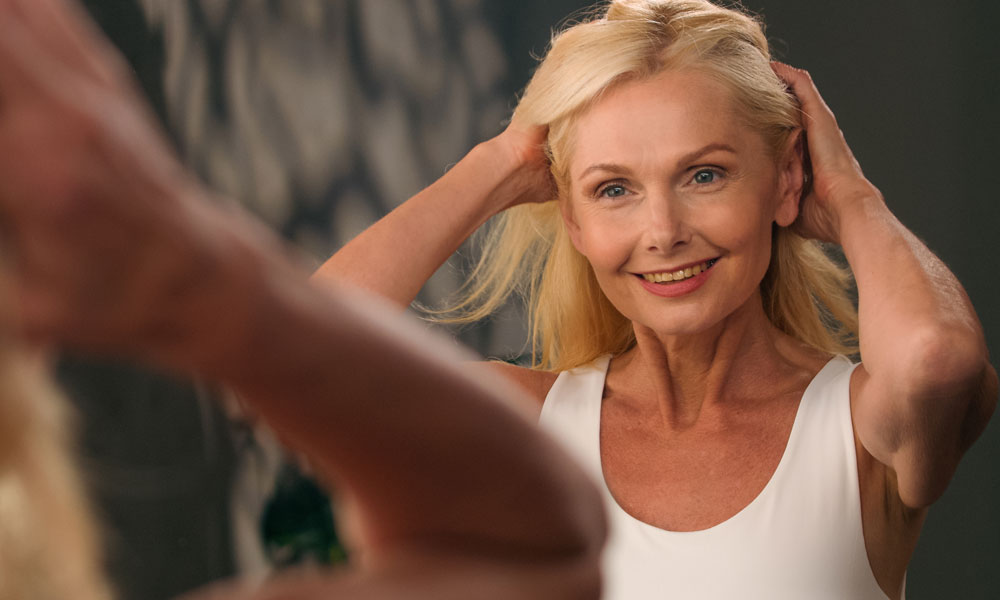
One of the most unsettling things about perimenopause is looking in the mirror and feeling as if your face has changed almost overnight. Make-up does not sit the same, cheeks look flatter, under-eyes seem more hollow, and skin can look tired no matter how much sleep you get. It is not your imagination – hormone changes genuinely alter the structure of the skin and the deeper tissues of the face.
The good news is that you do not have to resort to surgery to do something about it. Modern non-surgical treatments, delivered safely in a medical aesthetic clinic, can restore gentle volume, improve skin quality and support collagen without changing your features.
What really happens to your face in perimenopause?
As oestrogen levels start to fluctuate and then decline, several things happen at once:
- Collagen production drops, so skin becomes thinner and less firm.
- Elastin fibres degrade, so the skin does not “ping back” as easily.
- Facial fat pads shrink and descend, especially in the cheeks, chin and under-eye area.
- Bone density in the mid-face and jaw can reduce, subtly changing facial support.
On the surface, this shows up as:
- Flattened cheeks and deeper nose-to-mouth lines
- Hollows under the eyes and more obvious tear troughs
- Softening of the jawline and early jowls
- Fine lines, crepiness and an overall “tired” look
No amount of moisturiser can replace lost structure. Good skincare is still important, but when volume and support have changed, in-clinic treatments are often needed as well. This is where a medically led aesthetic clinic, or collaboration with a dermatologist, can make a real difference.
Dermal fillers: restoring volume and gentle lift
Dermal fillers are gel-like products, most commonly made from hyaluronic acid – a substance the body naturally produces. When placed precisely, they can replace lost volume and subtly lift areas that are starting to look hollow or sagging.
For perimenopausal volume loss, a typical plan might focus on:
- Cheeks – restoring gentle contour to the mid-face can soften nose-to-mouth folds and give a more rested look without obvious “apple cheeks”.
- Chin and jawline – carefully placed filler can improve facial balance, support early jowls and sharpen a jawline that has blurred with time.
- Peri-oral area – very small amounts can soften shadows around the mouth without creating a “pouty” appearance.
Under-eye hollows are a common concern, but also a riskier area. An experienced medical injector will assess whether dermal filler is appropriate there, or whether other treatments (such as skin boosters or polynucleotides) would be safer and more natural for your particular anatomy.
The key with dermal fillers in perimenopause is restraint. The aim is not to recreate a 20-year-old face on a 50-year-old woman; it is to replace what has been lost so that you look fresher, less drawn and more like yourself. In the right hands, results should be subtle enough that friends comment that you look well, not that they can see you have had “work done”.
Skin boosters and Profhilo: improving hydration and firmness
While dermal fillers act like internal scaffolding, skin boosters focus on the quality of the skin itself. They are usually very soft hyaluronic acid formulations designed to spread through the skin and attract water, improving hydration, elasticity and fine lines.
Profhilo is one of the best-known examples. It is not a traditional filler; instead of adding shape, it:
- Delivers a high concentration of hyaluronic acid into the skin
- Stimulates collagen and elastin production
- Improves overall firmness and “bounce”
- Gives a healthier, more luminous surface
Profhilo is often placed in a series of specific injection points on each side of the face over two initial sessions, with maintenance treatments every few months. It is particularly useful for crepey cheeks, lower face and neck – areas that can really start to show perimenopausal change.
Other skin boosters can be tailored to different needs, such as more intensive hydration, gentle plumping or addressing very fine lines. For many women, combining a structural approach (dermal fillers) with a skin-quality approach (Profhilo and other boosters) gives the most natural result.
Polynucleotides: supporting repair and elasticity
Polynucleotides are an exciting newer option in regenerative aesthetics. They are not fillers; instead, they work as bio-stimulatory treatments that help the skin repair itself.
They can:
- Encourage fibroblasts to produce more collagen and elastin
- Improve elasticity and thickness in thinning skin
- Reduce crepiness and fine lines
- Support healthier skin in delicate areas such as under the eyes or on the neck
Polynucleotides are often used where traditional fillers would be too heavy or obvious, or in combination with other treatments as part of a layered plan. For perimenopausal skin, they are particularly helpful for fragile under-eyes, the neck and areas of general laxity where the skin feels “loose” but you do not necessarily want added volume.
As with any injectable treatment, they should be administered in a medical aesthetic clinic, by someone with appropriate training and a clear understanding of facial anatomy and skin health.
LED light therapy: healing, collagen and glow with no downtime
LED (light-emitting diode) therapy uses specific wavelengths of light to stimulate different responses in the skin. It is completely non-invasive, painless and requires no downtime, which makes it a great supporting treatment during perimenopause.
Different wavelengths can:
- Boost collagen production over time
- Calm redness and inflammation
- Speed up healing after injectable treatments or skin procedures
- Improve overall radiance and evenness of tone
Many people describe LED sessions as a chance to relax – you simply lie back under the device while it does its work. For perimenopausal skin, LED can be used as a stand-alone “maintenance” treatment, or woven into a broader plan to enhance results from fillers, skin boosters, peels or microneedling.
Building a realistic, effective treatment plan
The most important step is a thorough consultation in a trusted aesthetic clinic rather than jumping straight into a menu of treatments. During that appointment, your practitioner should:
- Take a full medical history, including hormone status and any medications
- Assess your skin health, facial structure and existing volume loss
- Discuss what bothers you most – it might be the under-eyes, the jawline, or just a general “tired” look
- Explain which options are suitable, in what order, and what results you can realistically expect
For some women, starting with skin health (medical-grade skincare, perhaps on the advice of a dermatologist or skin specialist) makes sense before adding injectables. For others, replacing a small amount of structural volume immediately improves how they feel, and skin-focused treatments follow afterwards.
A good plan might combine:
- Home care: evidence-based skincare, sun protection and possibly prescription-strength products where appropriate
- Injectables: dermal fillers for strategic volume, Profhilo or other boosters for quality, polynucleotides for regeneration
- Device-based treatments: LED to support collagen and healing, and potentially other in-clinic procedures if needed
The best results usually come from doing a little of each, rather than relying on a single “hero” treatment.
Safety, expectations and choosing the right clinic
Perimenopause is a vulnerable time, and it is easy to be swayed by social media trends or dramatic before-and-after images. To protect your health and your results:
- Choose an aesthetic clinic run by medical professionals who are happy to discuss risks as well as benefits.
- Be wary of anyone who promises to “stop” ageing; the goal is to age well, not to freeze time.
- Ask about the specific products being used (for example, genuine Profhilo rather than a generic copy).
- Make sure you understand aftercare, follow-up and what happens if you have a concern after treatment.
For more complex skin issues, or if you have underlying conditions such as rosacea, acne or significant pigmentation, it can be helpful for your aesthetic practitioner to work alongside a dermatologist or GP so that your overall health and skin are considered together.
Perimenopause and ageing will change your face; that is part of being human. But with thoughtful, medically guided treatment, you do not have to accept feeling unlike yourself. By combining careful volume restoration, skin-boosting injectables and supportive therapies like LED, it is possible to look fresher, more rested and more confident – still very much you, just you on a good day.