
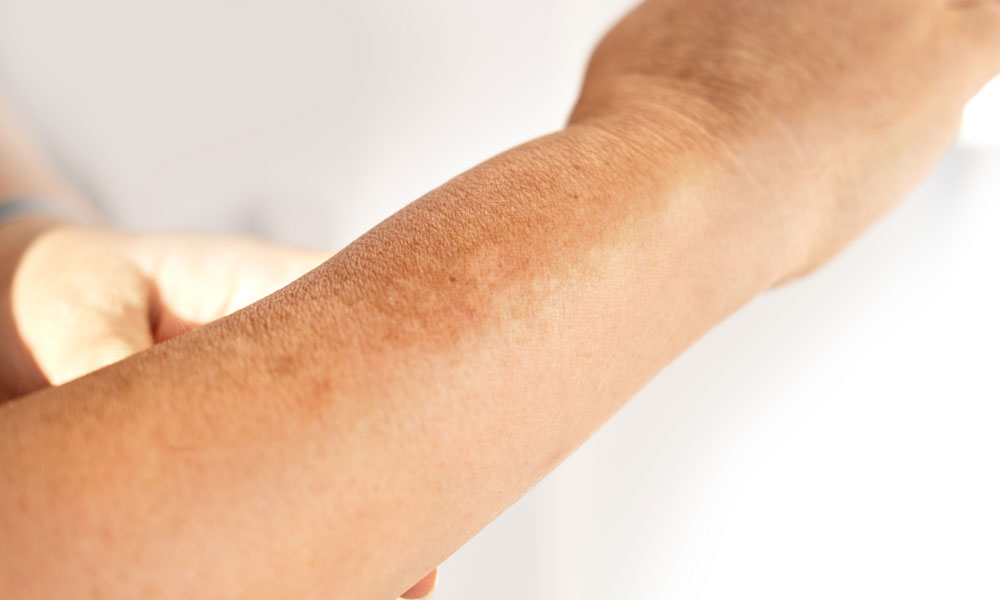
Most of us notice changes in our skin tone over time – little sun spots on the cheeks, leftover marks from breakouts, or larger patches of darkness that seem to deepen in summer. Uneven skin tone is very common, but not all pigmentation is the same. Two of the most frequent concerns we see in a medically led aesthetic clinic are general sun-related hyperpigmentation and hormone-driven melasma. They can look similar on the surface, but they behave differently and often need different treatment strategies.
Understanding the difference – and when to seek advice from an experienced skin specialist or dermatologist – is the first step towards safely improving your skin.
What do we mean by hyperpigmentation?
“Hyperpigmentation” is an umbrella term for any darkening of the skin due to an increase in melanin, the pigment that gives skin its colour. It isn’t a diagnosis in itself – it simply describes the way the skin looks.
The most common types we see in clinic include:
- Sun-related pigmentation: often called sun spots, age spots or solar lentigines. These typically appear on areas that see a lot of light over the years – face, hands, chest.
- Post-inflammatory hyperpigmentation: flat brown marks left behind after acne, eczema, bites, burns or even some aesthetic procedures as the skin heals.
Sun-related hyperpigmentation tends to show as scattered, discrete marks – like deeper freckles – and is closely linked to cumulative UV exposure and general photoageing (fine lines, texture changes, broken capillaries). It can affect all skin tones, though it tends to be more noticeable on medium and deeper complexions.
What is melasma – and how is it different?
Melasma is a specific type of hyperpigmentation driven by a mix of hormones, UV and genetic susceptibility. It usually appears as larger, patchy areas of brown or grey-brown discolouration, most commonly on the cheeks, forehead, upper lip and nose. The patches are often symmetrical from side to side.
Melasma is more frequently seen in:
- Women of childbearing age
- Those who are pregnant (“the mask of pregnancy”)
- People using hormonal contraception or hormone replacement therapy
- Individuals with a family history of melasma or with darker skin types
Unlike simple sun spots, melasma doesn’t arise from UV alone. Hormonal changes make pigment cells more reactive, so even everyday daylight, heat or a short holiday can deepen the patches. It also tends to be chronic and relapsing – it can improve with treatment but often returns if protection lapses.
How can you tell which one you have?
Because both melasma and sun-related hyperpigmentation show up as darker areas on the skin, it can be hard to tell them apart without a professional assessment. However, there are some clues:
- Pattern: sun spots tend to be small, well-defined dots or ovals; melasma appears as larger, blurred-edged patches.
- Location: sun-induced marks can appear almost anywhere that’s had long-term exposure; melasma strongly favours the central face.
- Triggers: if your pigmentation worsened during pregnancy, after starting the pill, or around menopause, melasma becomes more likely.
- Behaviour: sun spots usually change slowly over years; melasma can deepen quickly with sunnier weather, heat or holidays.
Self-diagnosis is not always reliable. If your pigmentation is new, changing, very dark, or worrying you, it’s important to be checked by a suitably qualified professional – often a dermatologist or an experienced medical practitioner working in an aesthetic clinic. They can rule out other causes and advise on the safest treatment options for your skin.
Treatment principles for sun-related hyperpigmentation
For general sun-related hyperpigmentation and post-inflammatory marks, treatment focuses on two things: preventing new damage and gently fading existing pigment.
- Daily sun protection
UV is the major driver of sun spots and a powerful trigger for all forms of pigmentation, so broad-spectrum sunscreen is non-negotiable. In pigmentation-prone skin, we usually recommend:
- High SPF (30–50) with good UVA protection
- Generous application every morning, with top-ups if you’re outdoors
- Added protection from hats and shade, especially in the middle of the day
- Targeted skincare ingredients
A medically led skincare plan can include ingredients that reduce pigment production, support cell turnover and calm inflammation. Common options (chosen and combined according to skin type) include:
- Vitamin C and other antioxidants
- Azelaic acid
- Niacinamide
- Gentle exfoliating acids (such as mandelic or lactic acid)
- Retinoids to support renewal, where appropriate
Prescription-strength pigment regulators may be considered under medical supervision for some patients, but these are not suitable for everyone and must be used with care.
- In-clinic treatments
Within a medical aesthetic clinic, sun-related hyperpigmentation may respond well to:
- Light to medium medical-grade chemical peels
- Microneedling combined with brightening serums
- Carefully selected laser or light-based treatments for specific sun spots
Because every skin behaves differently, a skin specialist will usually start with a thorough consultation, examine your pigmentation in good light (and sometimes with imaging devices), then build a staged plan rather than throwing everything at the skin at once.
Why melasma needs extra care
Melasma is more complex. The pigment often sits deeper in the skin, and melanocytes (pigment cells) are “primed” to overreact to very small triggers. Aggressive treatments, strong lasers, or unsupervised use of lightening creams can actually make melasma worse rather than better.
Safe, evidence-based melasma care usually combines:
- Rigorous photoprotection
Daily broad-spectrum, high-SPF, often tinted sunscreens (to help block visible light as well as UV) are central to melasma management, together with hats and shade. Consistency here can make as much difference as any in-clinic treatment. - Gentle but persistent topical treatment
Under guidance from a dermatologist or medical skin specialist, melasma may be treated with combinations of:
- Pigment-regulating agents (often prescription-only)
- Retinoids to support turnover and penetration
- Ingredients such as azelaic acid, kojic acid, niacinamide and tranexamic acid in carefully balanced formulas
The emphasis is on slow, steady improvement with minimal irritation, rather than quick but risky “stripping” approaches.
- Carefully selected procedures
Some patients with melasma benefit from:
- Very gentle, superficial chemical peels formulated for pigmentation-prone skin
- Low-energy laser or light-based treatments specifically studied in melasma
- Microneedling protocols tailored to reduce risk of post-inflammatory darkening (AAD)
These procedures should only be carried out by clinicians who understand the condition well and can adjust settings for different skin tones. Overly aggressive peels, high-energy lasers or repeated heat-based treatments can provoke rebound pigmentation.
Why a medically led approach matters
Because both hyperpigmentation and melasma are medical skin conditions rather than purely cosmetic concerns, it’s important to be assessed and treated in a setting where safety comes first. That usually means:
- Your skin is assessed by a clinician with medical training in dermatology or aesthetic medicine.
- Prescription options are available where appropriate, and you’re monitored throughout treatment.
- Any in-clinic procedures are chosen and adjusted based on your diagnosis, skin type and medical history.
A medically led aesthetic clinic can also work in partnership with your GP or dermatologist if your pigmentation is linked to underlying health issues, medications or hormonal changes.
When to seek help
You should seek professional advice if:
- You’re unsure whether you have melasma, sun damage or something else.
- Your pigmentation appeared suddenly or is changing quickly.
- Over-the-counter products have made your skin sore, sensitive or darker.
- Uneven tone is affecting your confidence and you’d like a structured, safe plan.
With the right diagnosis and a personalised, medically overseen approach, it is often possible to significantly improve uneven skin tone and keep it more stable over time. Hyperpigmentation and melasma can be stubborn, but you don’t have to navigate them alone – the first step is simply to ask for expert help.